
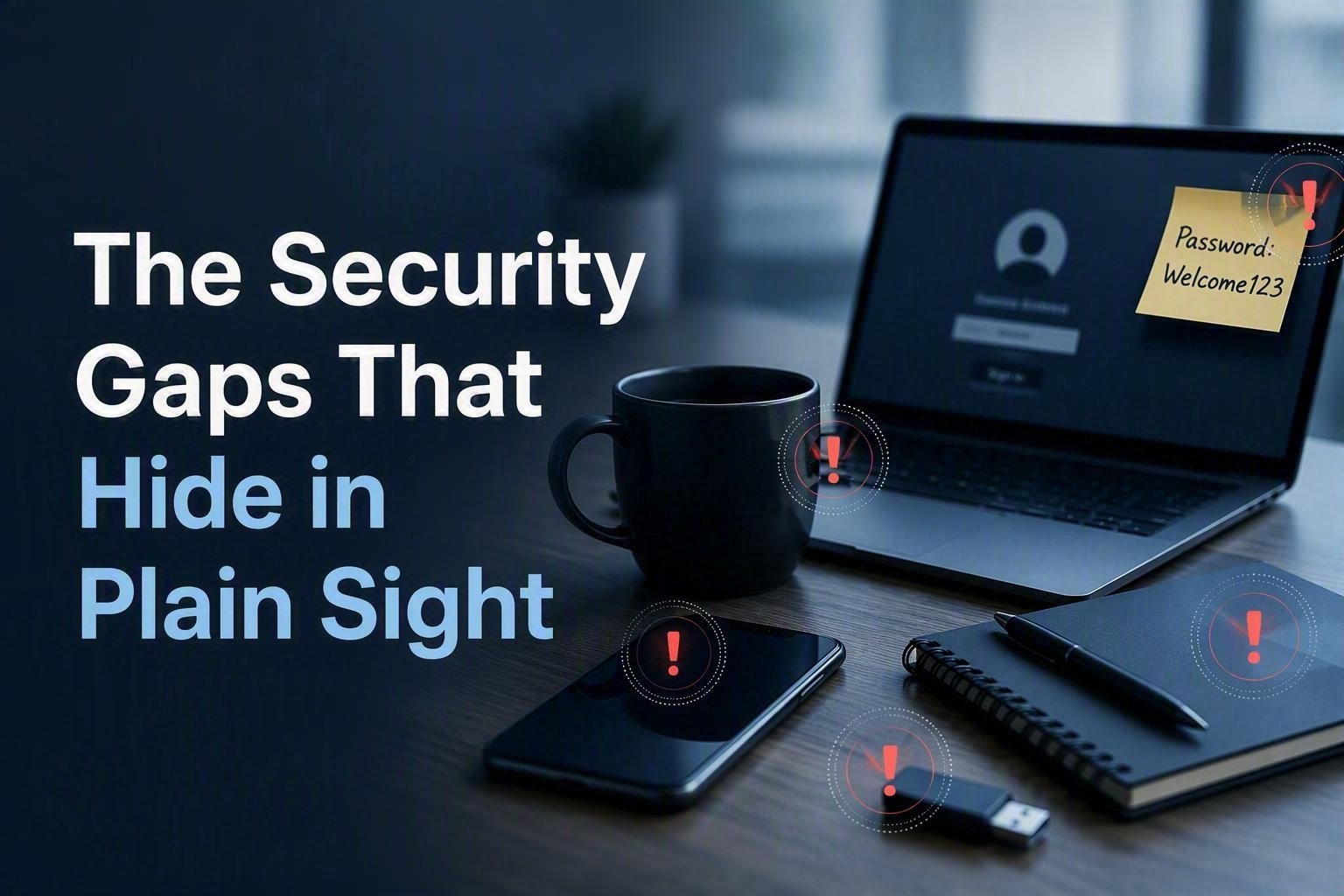
Most business leaders do not ignore cybersecurity because they do not care. They ignore it because it often feels invisible until something goes wrong.
The company is running. Employees are logging in. Email is working. Microsoft tools are being used every day. From the outside, everything appears normal.
But cybersecurity problems rarely begin with a dramatic event. They usually begin with small gaps that hide in plain sight.
An employee still has access to files they no longer need. A former staff member’s account was disabled but not fully removed from every connected system. A suspicious login was flagged, but no one reviewed it. A security alert came through, but it looked like all the other notifications everyone receives.
Each issue may seem minor on its own. Together, they create risk.
For CEOs, COOs, and CFOs, the concern is not just whether the company has cybersecurity tools in place. The bigger question is whether those tools are working together, being monitored, and producing clear business-level insight.
A growing company often moves fast. New employees are added. Teams change roles. Vendors get access to systems. Leaders approve new software because it solves an immediate problem. Over time, the environment becomes harder to see clearly.
That is where risk grows.
Cybersecurity is not only about stopping hackers. It is about understanding who has access to what, where sensitive data lives, which alerts matter, and how quickly your team can respond when something looks wrong.
One of the most common business problems is unclear ownership. Everyone assumes someone else is watching the details. Leadership assumes IT has it covered. IT assumes department heads know who needs access. Department heads assume access is removed when employees leave.
Assumptions create gaps.
For a CEO, the impact can be significant. A single compromised account can interrupt operations, expose client data, damage trust, and create unexpected costs. For a COO, it can slow down teams and create confusion during an already stressful situation. For a CFO, it can turn into financial loss, compliance concerns, or increased insurance scrutiny.
The good news is that many cybersecurity improvements do not begin with complexity. They begin with visibility.
Start by asking a few practical questions:
Who has access to your most important systems?
Are inactive accounts being reviewed regularly?
Can your team identify unusual login behavior?
Do you know which alerts are urgent and which are noise?
If an incident happened today, who would make the first decision?
These questions are simple, but they reveal whether cybersecurity is being managed as a business risk or treated as a background technical task.
Growth-oriented companies need cybersecurity that supports momentum. The goal is not to slow people down or create unnecessary friction. The goal is to protect the business while giving employees the tools they need to work confidently.
That requires a security approach built around clarity, not fear.
When leaders have visibility into access, alerts, risk, and response plans, cybersecurity becomes easier to manage. It becomes part of leadership conversations instead of something only addressed after an incident.
The companies that handle security best are not the ones that assume nothing will happen. They are the ones that prepare before pressure arrives.
If you are not sure where your hidden gaps are, that is the place to start.
Find out where your cybersecurity gaps may be hiding with a Cybersecurity Risk Assessment: https://uncommonsolutions.com/cybersecurity-risk-assessment-offer/

